Groundbait
Groundbait
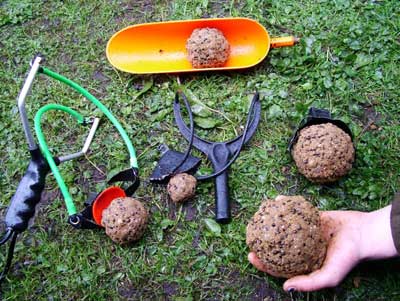
is used to attract fish into the swim and to keep them in a tight area
on, or close to, the bottom. It can be fed into the water in balls,
thrown in by hand at distances of up to about 45ft (14m), or
through a special groundbait catapult with a range of approximately
100ft (30m). Alternatively, an open-ended feeder attached to the line
will carry the groundbait as far as you can cast.
In its
simplest frm, groundbait is dried and crushed bread. Anglers call this
'crumb' and, when laced with squatts, this is the best mix for bream
fishing.
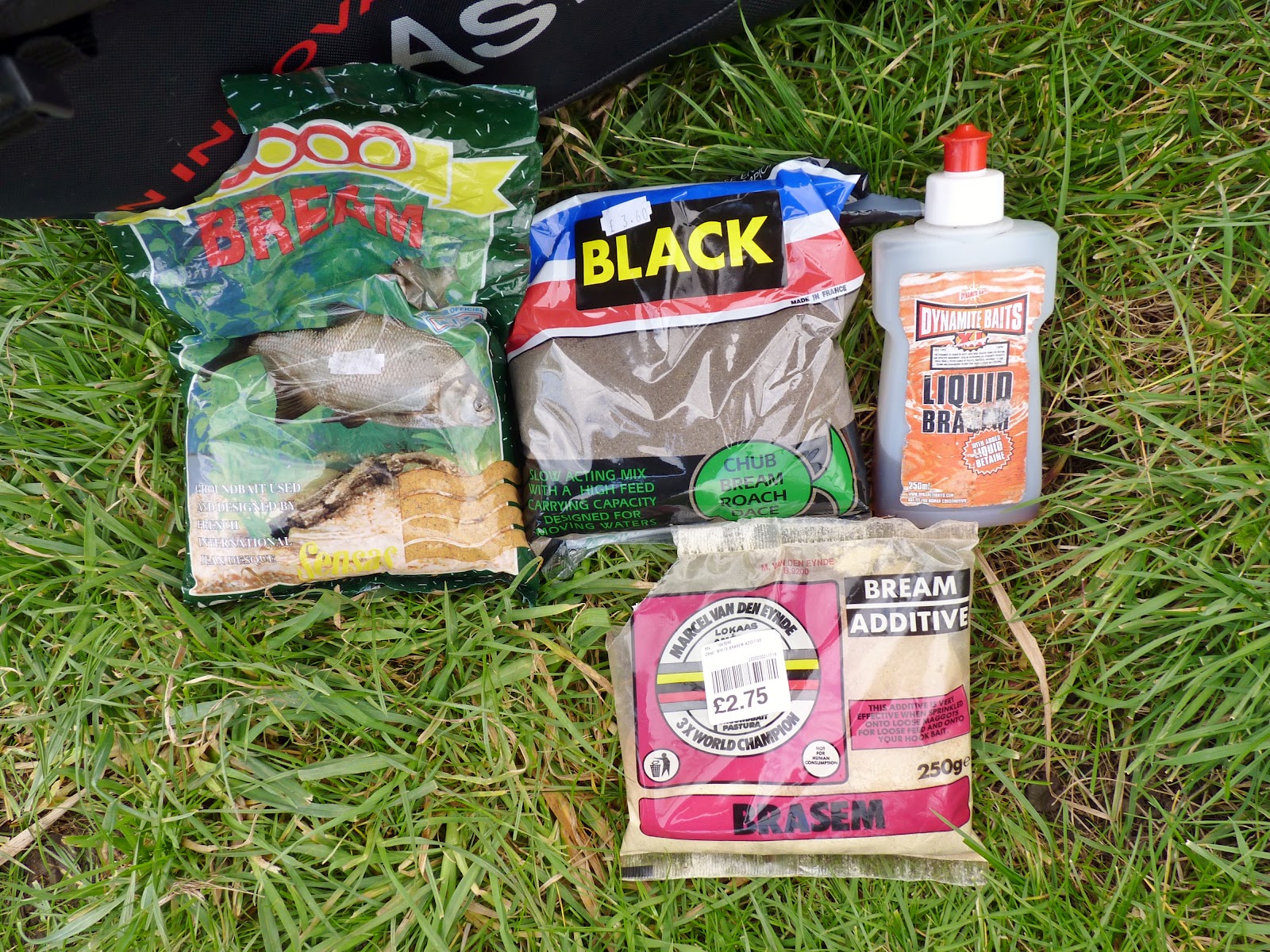
In recent years, so-called Continental groundbaits
containing all sorts of unusual ingredients in addition to bread have
begun to occupy an increasing amount of space on the shelves of tackle
shops. Several brands are designed specifically for enticing one
particular kind of fish and, luckily for the beginner, this is usually
stated on the packaging. For instance, a French groundbait
manufactureres, Sensas, market a range of separate groundbaits under
the names Roach, Tench, Bream, and Carp.
Manufacturers tend to
keep the actual contents of their mixes secret to prevent them being
copied. You cannot blame them; there are not too many other businesses
where the customer pays good money for a product which he immediately
throws away.
How to Mix GroundBait
In addition to choosing mixes to suit individual species, you should also consider the venue you will be fishing. For a deep, fast-flowing river,you will need a groundbait
that binds together strongly so it will drop down to the bottom without
breaking up. The flow of water will then help to break down the balls
of groundbait. On a shallow lake, however, a mixture of this type would be useless as the ball would just sit on the bottom without breaking up.
A
much lighter mix which starts disintegrating as it hits the water is
needed. Many companies actually take the trouble of stating for which
kind of venues and fishing methods each of their mixes is best suited,
including the ideal depth of water.
Breaking Up
You
can get any mix to behave differently just by varying the amound of
water you add. The drier the mix, the quickier it will break up on
contact with water.
Generally speaking, it is necessary to
create a mix which will hold together as it enters the water, but will
break up close to the bottom. If you can produce a fine groundbait that
will do this, it will create an attractive cloud close to the bottom,
and this can prove deadly to fish on clear, hard-fished stillwaters.
You
can also change the performance of groundbait by adding PV1 Colant - a
powerful powder binder - which is extremely effective. PV1 powder
should be added to the dry ingredients of the groundbait before mixing
with water; the more you use, the harder the balls will be.
Flavors and Additives
In
tandem with the boom in groundbait has come a veritable cornucopia of
flavors and additives. These are available in liquid, or powder, form
and most state on the packinging which specie they are designed to
lure. Liquid flavours should be added to the water that you use to mix
with the groundbait, whereas powders are mixed with the dry groundbait
before adding water.
Much research has gone into additives and
some top specialist and match anglers are enthusiastic fans. It is
generally believed that sweet flavors are best in the summer, and spicy
flavors in winter.
Tips on Mixing Groundbait
- Making
general recommendations is difficult and is often better to ask you
local tackle dealer what groundbait mix has been working well on your
chosen venue. However, great success may be had by using various mixes
of Sensas Lake, Match Blend and Canal Extra. Experience shows that
darkm fine mixes work best on hard-fished venues., especially in
winter. Effective methods for darkening a mix include using a powedered
cloloring or simply adding soil. Red groundbait can work for some
anglers though, curiously, not for others.
- It is worth pointing
out that on some waters groundbait is the kiss of death and you are
much better off just loosefeeding. But you will have great fun
experimenting and will, no doubt, come up with your own favorite mixes.
- Do
not use live maggots in balls of groundbait for catapulting into the
water. They move about too muhc and will break up the balls in
mid-flight.